
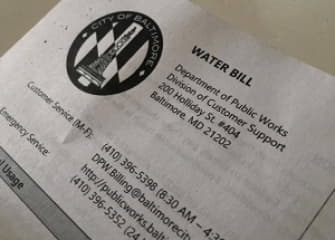
As Mayor Catherine Pugh’s administration seeks to alter a bill that would forever end Baltimore’s practice of selling homes’ water-bill debts, advocates have stumbled across data they say point to the city’s over-reliance on the tax sale process.
In a fiscal note for Sen. Mary Washington’s SB 96, the city said that as of January 23, “there are approximately 18,189 residential properties” with water and sewer debt of at least $750 outstanding for at least 270 days, or roughly nine months. The cumulative amount owed by those households: $61.6 million, the city said.
DPW said as recently as November that it has approximately 180,000 water and sewer customers in the city limits. That implies one in 10 Baltimore households has $750 or more in unpaid water bills, the threshold at which a property is eligible for tax sale, even as the city’s rates continue to rise. And while many of them are now shielded from tax sale thanks to a 2018 moratorium protecting homeowner-occupied properties, thousands of renters still face the risk that the city will sell the liens on their landlord’s property in the springtime, after which a new creditor can foreclose if the owner does not pay.
READ FULL ARTICLE HERE

