Nakia Nicholson
The issues facing cities like Baltimore with high concentrations of poverty are complex and challenging. Affordable housing, jobs, transportation, education, health, public safety and quality of life all come together to create overwhelming circumstances that perpetuate a downward spiral for many families. The public institutions serving Baltimore must address these challenges and integrate resources in a way that provides citizens an opportunity to escape poverty and have the resources to succeed. Accordingly, the solution is the development of creative and vibrant partnerships.
Partnerships require all parties adjust to the strengths of each partner. A good example of how partnerships can work together to create impact are charter schools. Charter schools provide innovative solutions to problems that plague our city.
Charter schools in Baltimore have been a vehicle for transformational partnerships. They serve some of the most challenging populations and bring together public, nonprofit and private entities to solve problems in creative ways. Charter schools empower families to make a choice and open doors of opportunity for a better future.
The charter community recognizes that the sequence of education is different for underserved students. Rather than focusing primarily on instruction, charters recognize the importance of addressing the social and emotional needs of students first. These needs include physical safety, food access, clothing, behavioral support and social and emotional training for staff. Only when these needs are effectively addressed, research tells us, does the impact of effective academic instruction take hold. Charters applying a whole-child model truly, genuinely and comprehensively transform the lives of students, their families and communities.
Charter schools use creative financing to provide more services for students, and they attract committed and talented professionals to bring new thinking to solve old problems. Charters in Baltimore offer safe and secure environments that include additional instructional and mental health services. They have provided additional funds into the education of our boys and girls, reaping benefits that impact the entire community.
Given the need for transformational partnerships, the recent recommendation to close three charters in Baltimore is troubling. Monarch Academy Baltimore, for example, serves nearly 1,000 students from across the city, with a strong representation from some of the most challenging neighborhoods in the city. Monarch achieves this distribution of students by providing citywide bus transportation outside of the MTA.
Monarch Academy Baltimore renovated a vacant building in a neighborhood in decline by using creative financing with public partners to build a state-of-the-art school with an enriched learning environment. Monarch further invested in vacant houses near the school to revitalize the community it serves.
Monarch Academy Baltimore attracts many students with disabilities due to its strong reputation and numerous personal referrals from other city school employees who are unable to support and stabilize struggling students. Parents also know their child’s special education needs are being met and their children are achieving their Individualized Education Program goals. The Children’s Guild, the parent company of Monarch Academy Baltimore, has been a leader in special education in Baltimore since 1953.
Closing this school will severely impact both the families of students and the local community. In fact, 67 percent of the students would return to schools performing about the same or worse on the PARCC test than Monarch Academy Baltimore. An unoccupied building would contribute to the problem of building vacancy. Simply put, the city would lose a valuable, transformational partner.
In exercising due diligence, the Board of School Commissioners should assess the schools recommended for closure from both an education and economic perspective. What assets does the charter school bring to the students and residents of the community, and what would the loss of those assets mean to the black community as well as Baltimore City overall?
Our families have selected our school for a variety of reasons. The board should consider all aspects of success, which speaks to the instructional philosophy of Dr. Sonja B. Santelises, CEO of Baltimore City Public Schools. Importantly, the board should render a decision that will promote how partnerships, as a district priority with open communication, are reciprocal and productive.
Solutions are best achieved when all partners operate in a spirit of collaboration. Instead of looking at issues through a single lens, let us commit ourselves to address the issues of urban complexity by leveraging assets, encouraging thriving partnerships, embracing creative solutions and looking at the wholeness of our families to benefit all of our children.
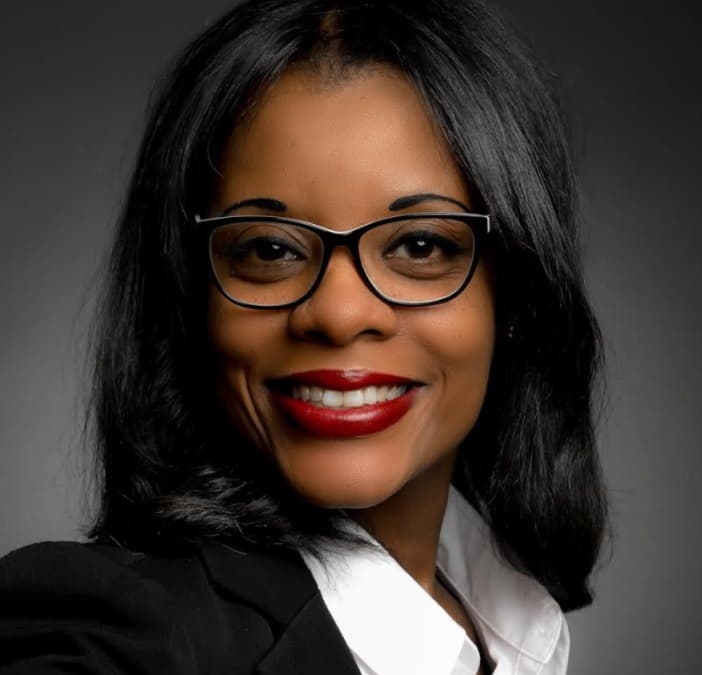
Nakia Nicholson is the chief academic officer of Monarch Academy Baltimore and a former Baltimore City Public Schools administrator.