
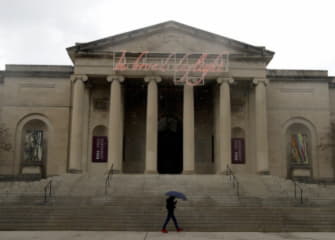
The Baltimore Museum of Art, seen here in April, has been the subject of controversy over proposed deaccessions.(Associated Press)
The goal was absolutely worthwhile: Raise the wages of the lowest-paid employees at the Baltimore Museum of Art to something resembling a livable income. Among those employees are entry-level museum guards earning $13.50 an hour in a city where almost 63% of the population is Black.
But the methods used to achieve that worthy goal were questionable.
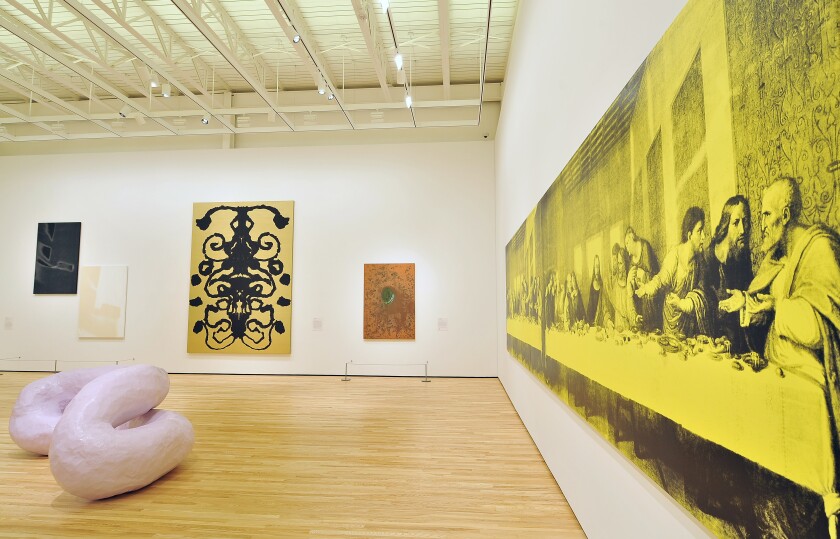
The BMA’s idea was to auction off three high-profile works by Andy Warhol, Clyfford Still and Brice Marden, then use the gains — an estimated $65 million — to establish the Endowment for the Future, a fund that would, among other things, address wage inequities across the organization.
That plan, however, went against the spirit of deaccession rules relaxed during the pandemic by the Association of Art Museum Directors and unleashed a firestorm of criticism. Deaccession, as the association’s president wrote in a recent memo, was to help institutions financially affected by the COVID-19 crisis, not “for long-term needs.”
Dozens of community members, including former museum trustees, wrote a furious letter to the Maryland state attorney general. Two former board chairs, Charles Newhall III and Stiles Tuttle Colwill, rescinded planned bequests to the institution totaling $50 million.
Just hours before the paintings were set to go to auction at Sotheby’s late last month, the museum canceled the sale.
(Getty Images)
Media coverage has focused on the contretemps between BMA director Christopher Bedford and various board members, including artist trustees Adam Pendleton and Amy Sherald, who resigned in the middle of the controversy. (Both said they could not devote adequate time to the board.)
But what about those frontline workers at the heart of this story?
The goal of the BMA’s plan was and remains a noble one and should not be discarded.

