
Summary
- The suburbs are back. Amid the coronavirus pandemic, residential REITs - particularly the traditionally countercyclical single-family rentals - have proven to be a source of relative shelter for investors.
- Single-family rental REITs are one of six real estate property sectors in positive territory in 2020. Despite the pandemic-related headwinds, SFR REITs reported near-perfect rent collection and strong rental growth.
- Fueled by the maturing millennial generation, the 2020s were already poised to be a decade of 'suburban revival,' and behavioral changes in the post-coronavirus world have provided an added spark.
- Single family rentals have become the default "starter home" as rising home prices have stretched affordability. Record-low mortgage rates, however, have pulled some move-up buyers into the ownership markets.
- The U.S. housing industry continues to be the unexpected leader of the post-pandemic economic recovery, a stark contrast from their role as a "provocateur" during the Financial Crisis.
- This idea was discussed in more depth with members of my private investing community, iREIT on Alpha. Get started today »
REIT Rankings: Single-Family Rentals
(Hoya Capital Real Estate, Co-Produced with Brad Thomas)
Single-Family Rental Sector Overview
Amid the coronavirus pandemic, residential REITs - particularly the traditionally countercyclical single-family rentals - have proven to be a source of relative shelter for investors and are one of just six property sectors in positive territory in 2020. In the Hoya Capital Single-Family Rental Index, we track the three single-family rental REITs (SFRs) which account for roughly $25 billion in market value: Invitation Homes (INVH), American Homes 4 Rent (AMH), and Front Yard Residential (RESI). These REITs collectively own nearly 150,000 single-family rentals, primarily in the Sunbelt region.
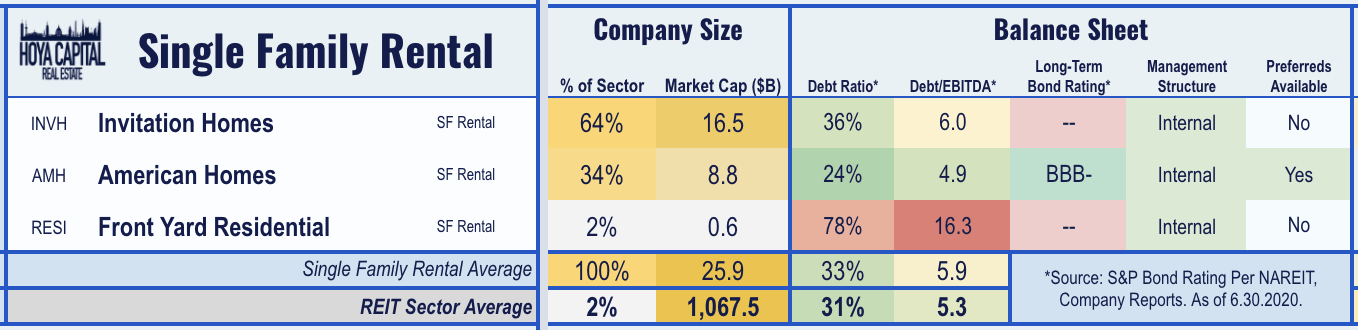
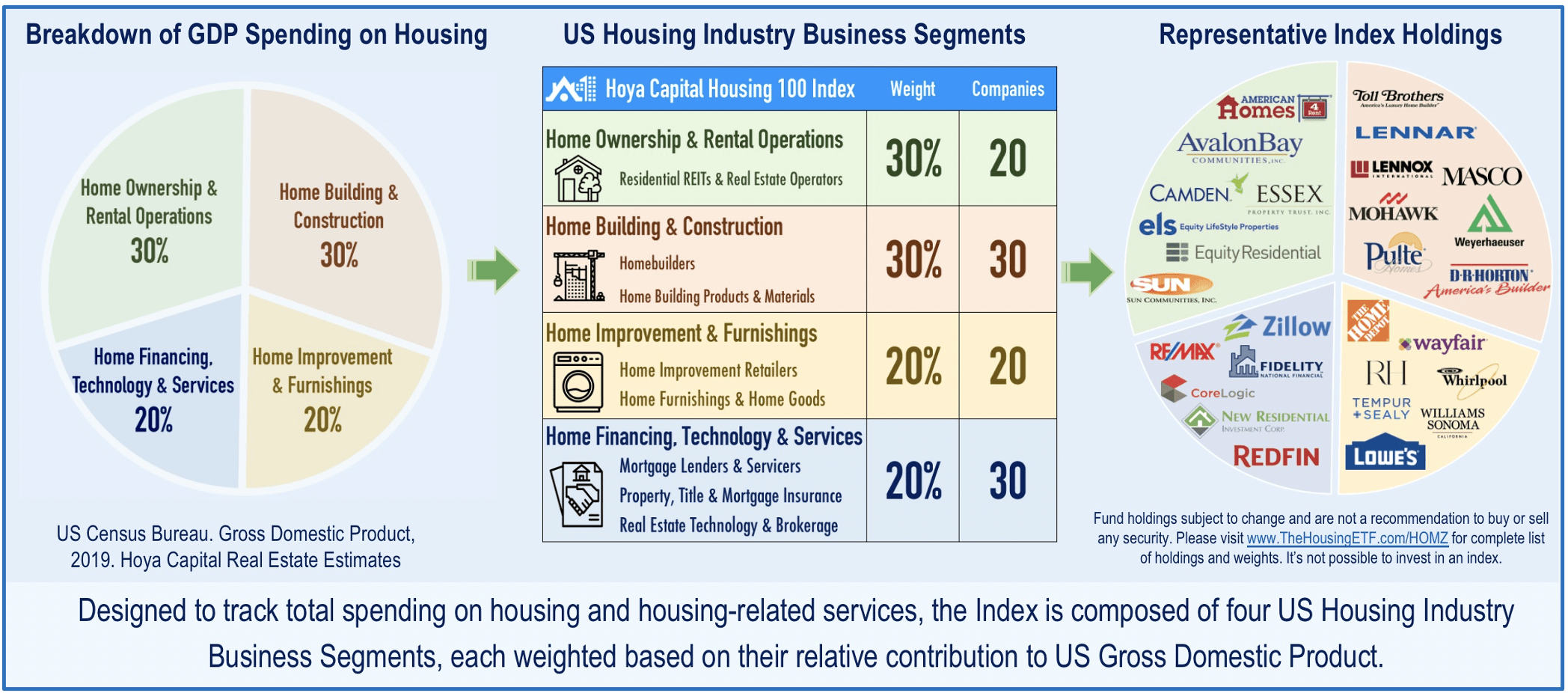
The U.S. housing industry continues to be the unexpected leader of the post-pandemic economic recovery, a stark contrast from its role as a "provocateur" during the Financial Crisis. Single-family rental REITs comprise roughly 1-2% of the "Core" REIT ETFs. SFR REITs also represent 3% of the Hoya Capital US Housing Index, the benchmark that tracks the GDP-weighted performance of the US Housing Industry. Single-family rental REITs - along with their residential REIT sector peers (Apartments and Manufactured Housing REITs) have been some of the most significant beneficiaries of the lingering housing shortage, producing same-store NOI growth that has been consistently above the REIT sector average for the past decade.
Single-family rentals have become the default "starter home" as rising home prices have stretched affordability over the past decade. Fueled by the maturing millennial generation, the 2020s were already poised to be a decade of "suburban revival" and behavioral changes in the post-coronavirus have provided an added spark. Whether they're renting or owning, the maturing millennial generation will enter the single-family housing markets in full-force in the 2020s in a quantity and magnitude not seen since the young boomers began to flock to the suburbs the late 1970s. Record-low mortgage rates, however, have pulled some move-up buyers into the ownership markets.
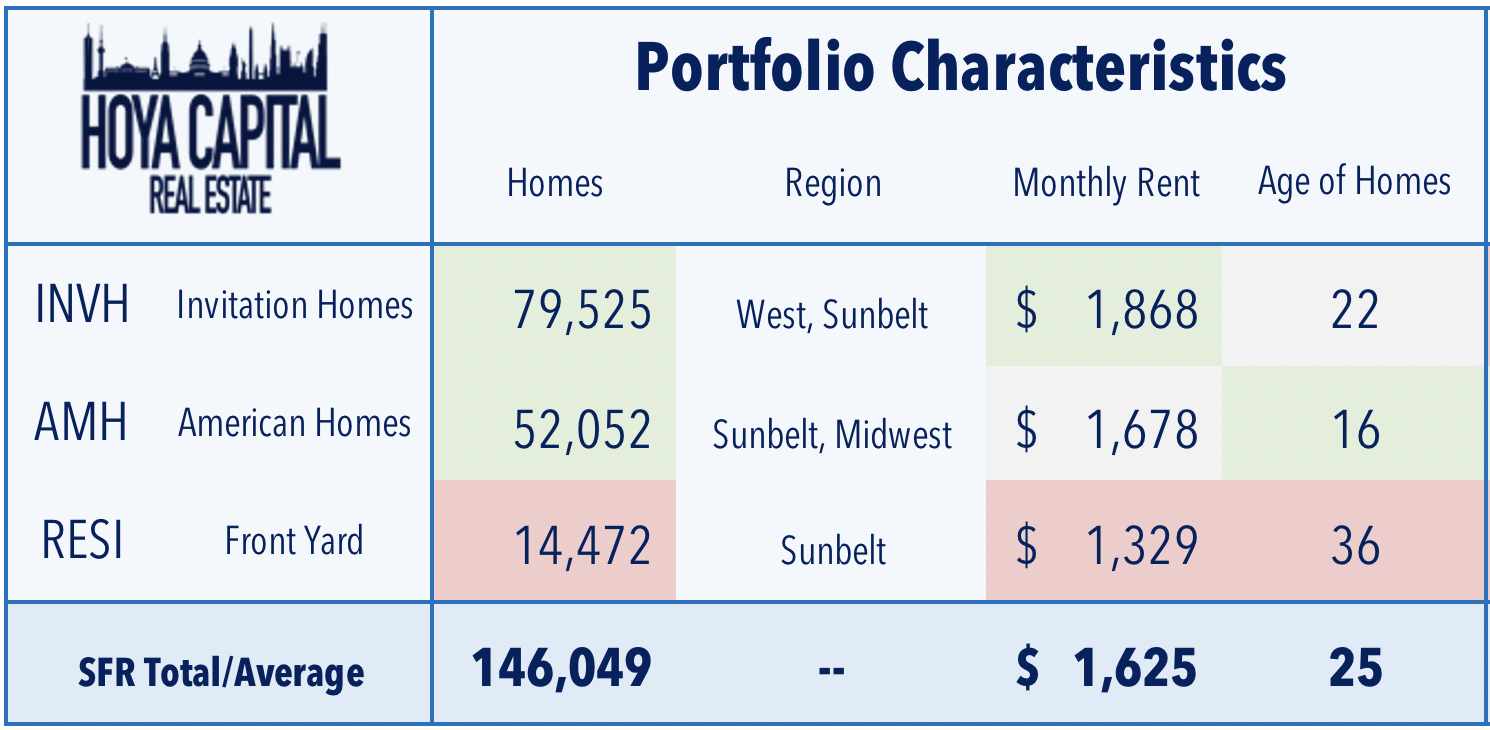
Single-family rental REITs concentrate on markets that have experienced the strongest economic growth during the post-recession recovery, most notably in the Sunbelt region. Ironically, the distress in the aftermath of the "housing bubble" hit this region particularly hard, which facilitated the rise of institutional rental operators like these SFR REITs. The Sunbelt is expected to benefit from an added tailwind amid the ongoing out-migration out of the high-density "shutdown cities." As discussed in Apartment REITs: Urban Exodus, lockdown policies have plunged these coastal economies into an uncontrolled tailspin, backtracking a two-decade-long trend of urban revival. Outside of these troubled markets, however, national rental markets have been remarkably resilient throughout the pandemic.

